Group Tour · Utqiaġvik, Alaska

Point Barrow
Arctic Experience
Stand at the Top
of America.

A guided tour to the northernmost point in the United States — 71.38°N latitude, where the Arctic Ocean, Beaufort Sea, and Chukchi Sea converge. Led by Robin Mongoyak, a lifelong Iñupiat guide born and raised in Utqiaġvik (Barrow), Alaska.

Book This Tour See What's Included
Duration 2.5 – 3 hrs
Price $175/pp · $225 solo groups of 2–3 · solo traveler
Group Size Max 3 guests
Language English
Departure Utqiaġvik pickup included
Availability Daily 9 AM–7 PM* *mid-Jun–mid-Oct; other months vary
Reserve Your Spot Final availability and pricing are confirmed after booking review. Tours operate weather permitting.
Departure windows: From mid-June through mid-October, Point Barrow tours are available daily from 9:00 AM – 7:00 PM. Outside of that season, weekday departures are available from 5:00 PM – 7:00 PM, and weekend departures are available from 9:00 AM – 7:00 PM. All Point Barrow tours are weather- and condition-dependent. Bookings are requests and confirmed by Robin after review.

The Tour

A Place Most People
Will Never Reach

Point Barrow sits at 71.38°N — the northernmost tip of the United States. There is no road here, no public access, no visitor infrastructure of any kind. The only way to stand at this point is to fly into Utqiaġvik and go out with someone who knows the land. That's not a selling point. That's just how it is up here, and it's exactly what makes this tour worth making the trip for.

From Utqiaġvik, we drive out across the North Slope tundra — flat, wide-open land that stretches to every horizon. In summer, Arctic wildflowers bloom across the permafrost and the sky never gets dark. In winter, the landscape turns white and the sea ice pushes up along the coast in pressure ridges that can reach ten feet high. The drive itself is a piece of the experience — most people have never seen terrain like this, and Robin talks through what you're seeing the whole way out.

At Point Barrow itself, you're standing where three bodies of water meet: the Arctic Ocean, the Beaufort Sea, and the Chukchi Sea. The wind comes off the water with nothing between you and it. For a lot of visitors, this is the moment they understand what the Arctic actually is — not a photograph, not a documentary, but a real place, felt in your face and your hands and the way the ground moves under your boots.

"I've been coming out to Point Barrow my whole life. My family has hunted and traveled this coastline for generations. When I take someone out there for the first time, I watch them try to take it in — the water in three directions, the wind, the flatness of everything. There's nothing like it anywhere else in this country."

— Robin Mongoyak, Iñupiat Guide & Founder, Kiita Tours

This tour is year-round, and each season shows you something different. Spring brings bowhead whales migrating through the leads in the ice. Summer is open water and Arctic birds. Fall is freeze-up — a few days when the ocean turns to ice right in front of you. Winter is the hardest season, but visitors who come dressed and prepared often call it the most memorable. Robin will tell you what's happening in the environment during your specific visit — the kind of detail you only get from someone who has watched this place change season by season for decades.
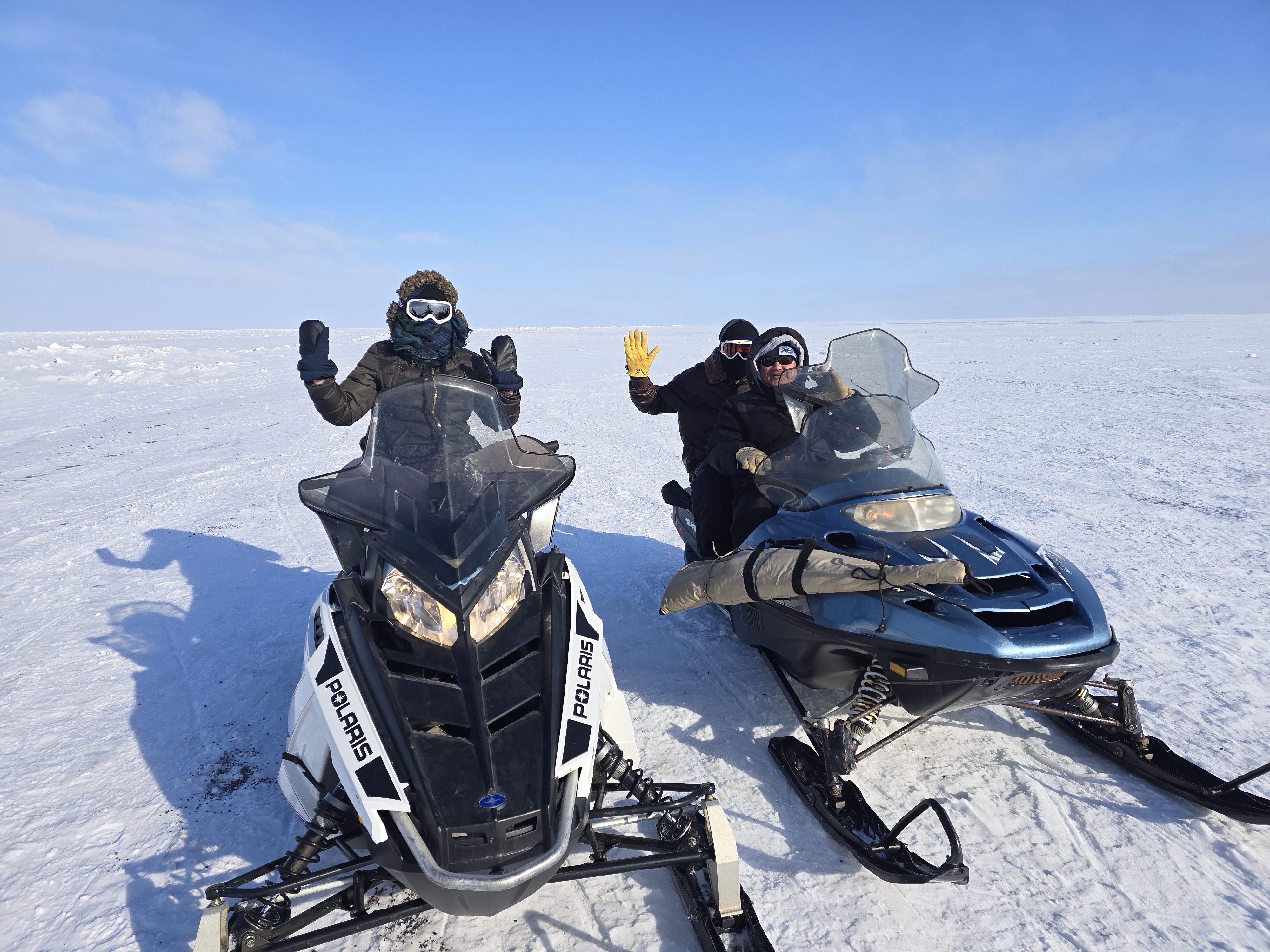
Visitors standing at Point Barrow — the northernmost point in the United States — on a guided Kiita Tours Arctic experience from Utqiaġvik, Alaska

Winter Access

Winter Point Barrow Tours
by Snowmachine

There is no road to Point Barrow. In winter, the only way out is by snowmachine. Here's exactly what that looks like — and what you need to be prepared.

Two guests riding as passengers on snowmachines during a winter Point Barrow tour with Kiita Tours
Winter Transport
Guests riding as passengers on snowmachines during a winter Point Barrow tour.
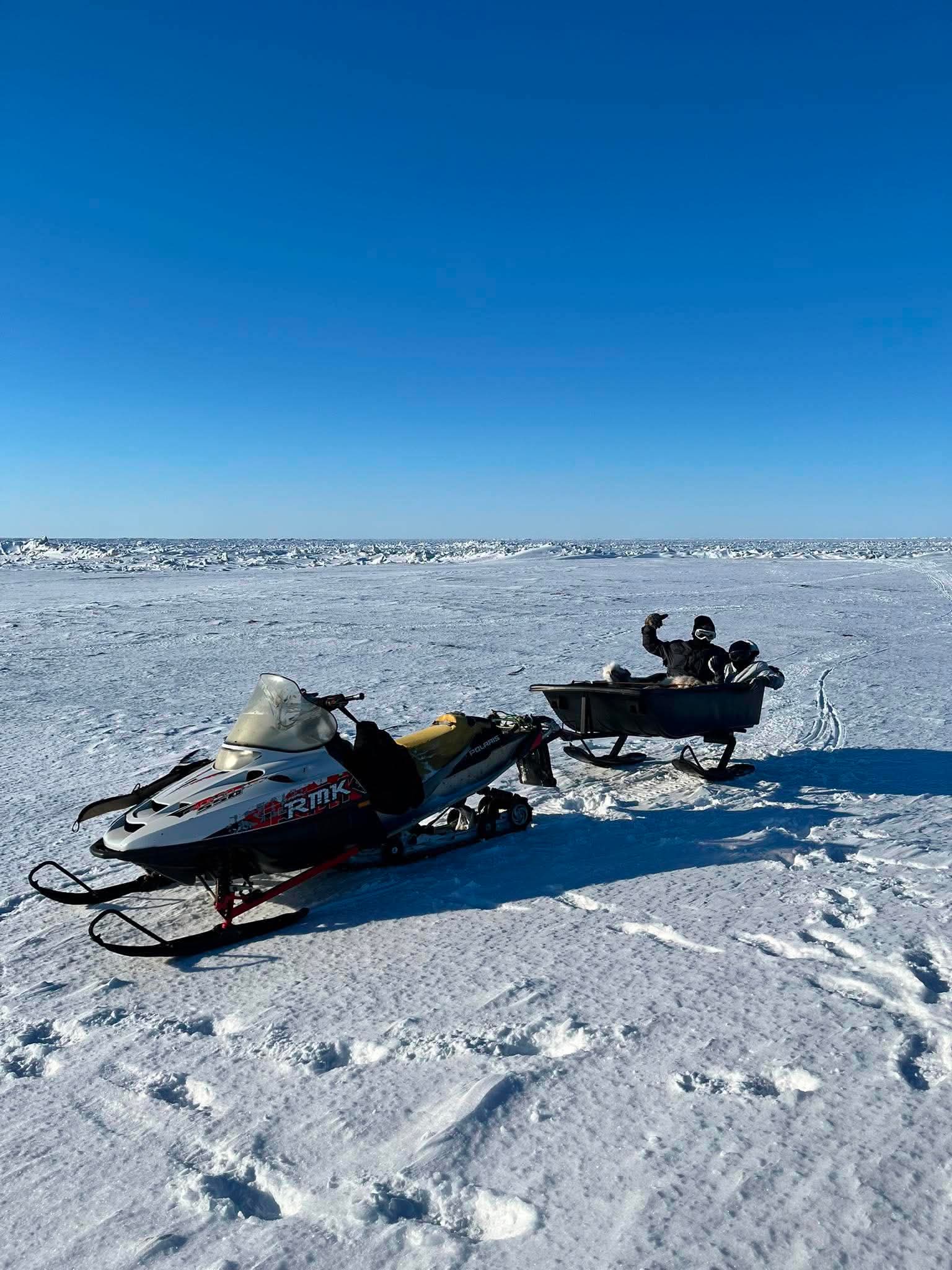
Two guests riding in a ski sled pulled by a snowmachine on the winter route to Point Barrow
Passenger Sled
Guests riding in a ski sled pulled by a snowmachine on the winter route to Point Barrow.
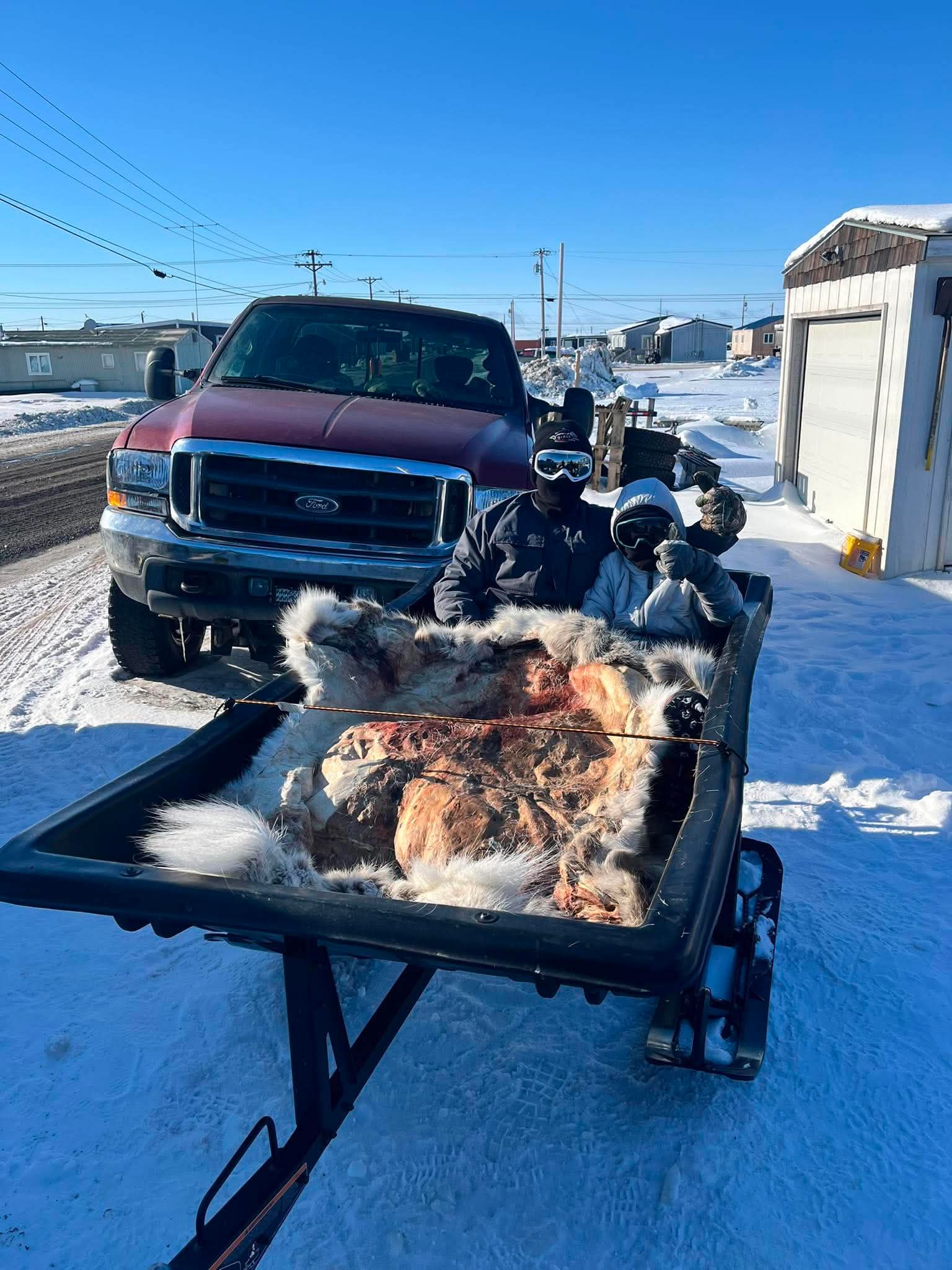
Close-up of the passenger sled fitted with caribou hides for warmth during a winter Point Barrow tour
Caribou Hide Sled
The passenger sled is fitted with caribou hides for added warmth and comfort in Arctic conditions.

In winter conditions, Point Barrow is reached by snowmachine. There is no road and no alternative route. Depending on the number of guests and conditions on the day, Robin will have guests ride as passengers on snowmachines directly, or in a sled with skis pulled behind a snowmachine. The sled is fitted with caribou hides — an Iñupiat tradition that adds real warmth against the cold.

This is an exposed Arctic route. Wind comes off the water with nothing to break it, and temperatures with windchill can be severe. The route itself is part of the experience — the same path Iñupiat hunters have traveled for generations — but it requires guests to arrive dressed and prepared for real winter conditions.

Guests who are not appropriately dressed may not be able to safely participate. Robin will assess conditions on the day. Safety and guide discretion come first. If you have any questions about what to wear, reach out before your tour — he would rather help you prepare than turn anyone away.

Required Winter Gear
  • Insulated parka rated for extreme cold
  • Insulated snow pants or bibs
  • Winter boots rated for -25°F or colder
  • Warm hat that covers the ears
  • Insulated gloves or mittens (liner gloves recommended)
  • Face protection — balaclava or neck gaiter
  • Layered base and mid-layer clothing underneath
Kiita Tours may adjust, reschedule, or cancel winter tours if weather, trail, or gear conditions are unsafe. Gear questions? Email Robin before you book.

What's Included

What You'll Experience

Point Barrow tours cover a lot of ground — literally and culturally. Here's what you can expect on this tour from Utqiaġvik.

The Northernmost Point in the US

Stand at 71.38°N — the exact geographic northern tip of the United States. Very few Americans ever reach this point.

Three Seas Converging

See where the Arctic Ocean, Beaufort Sea, and Chukchi Sea all meet — one of the most striking geographic points in North America.

Arctic Tundra on Foot

Walk across permafrost terrain that has never been paved or developed. The same ground Iñupiat hunters have traveled for thousands of years.

Iñupiat History & Culture

Robin explains the deep cultural significance of Point Barrow — as a hunting ground, navigation landmark, and ancestral territory of the Iñupiat people.

Wildlife Observation

Arctic foxes, shorebirds, sea ducks, and marine mammals are common depending on season. Spring brings bowhead whales migrating through the ice leads.

Seasonal Conditions Explained

Robin tells you exactly what the environment is doing during your visit — sea ice conditions, wildlife patterns, weather history — the kind of context only a lifelong local can give.

Point Barrow Wildlife

Arctic Life in Motion

Point Barrow sits along one of North America's most active migratory corridors. King Eider ducks, shorebirds, Arctic foxes, and — in spring — bowhead whales moving through the ice leads are all part of the landscape here.

This video was filmed at Point Barrow during a tour. What you'll see depends on the season, but the wildlife is never far.

King Eider ducks in flight over Point Barrow — filmed on tour

The Experience

What You'll Experience

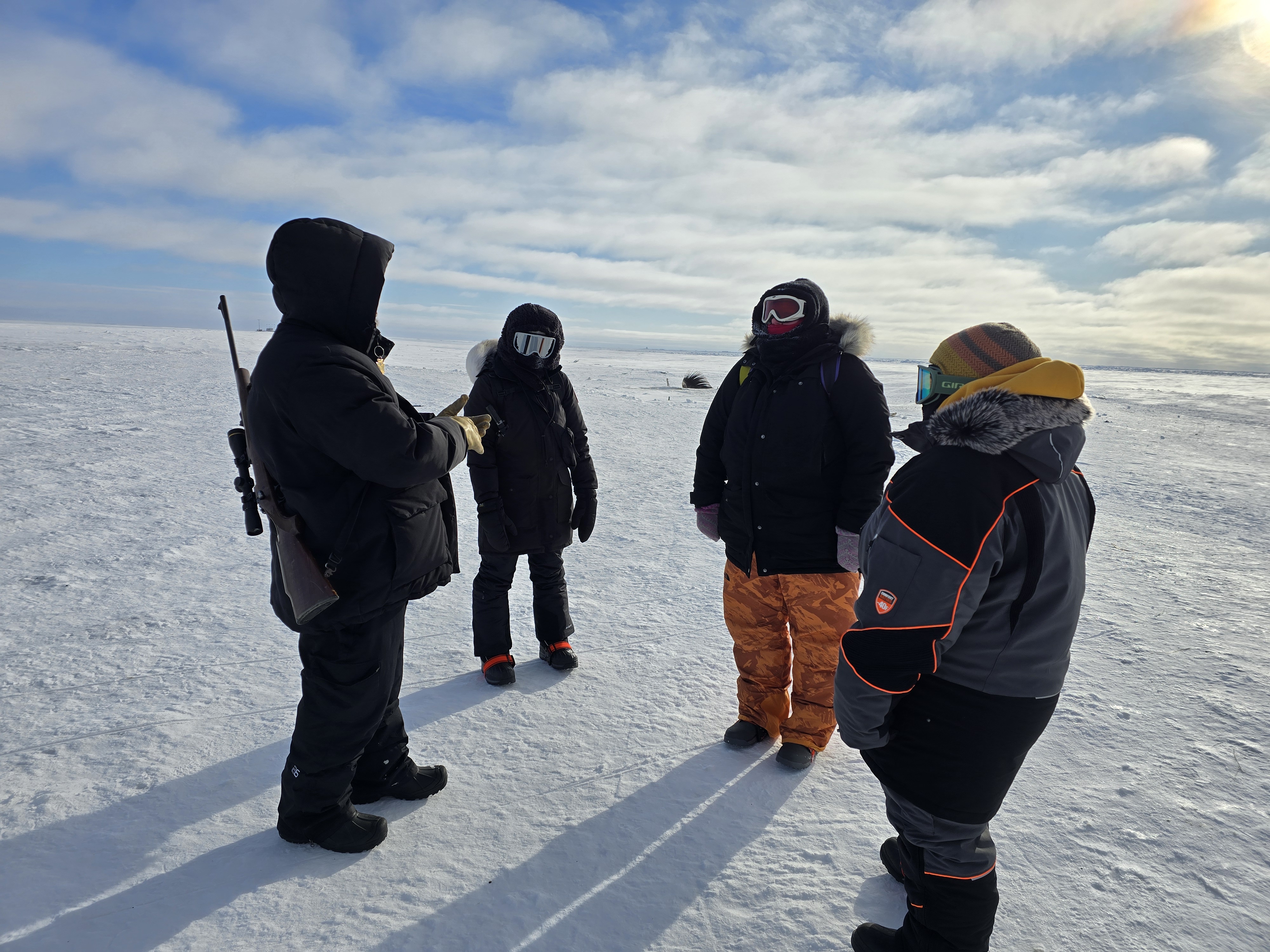
Robin Mongoyak guiding three guests at Point Barrow, the northernmost point in the United States — Utqiaġvik, Alaska
Point Barrow  ·  71.38°N
Standing at the northernmost point in the United States
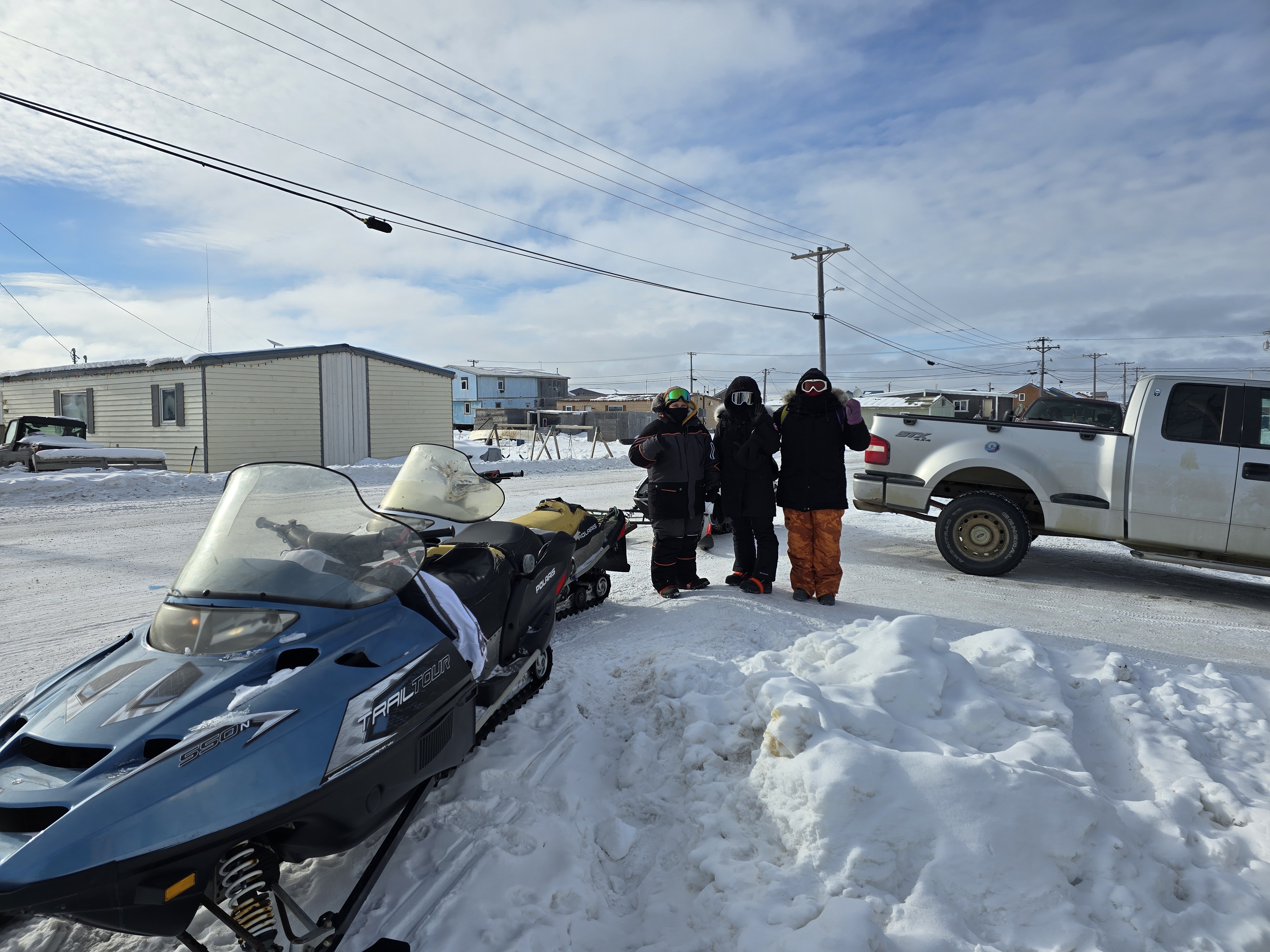
Guests gearing up beside a snowmobile in Utqiaġvik, Alaska — ready to depart on a Kiita Tours Point Barrow Arctic experience
Utqiaġvik  ·  Arctic Alaska
Preparing to venture out onto the Arctic landscape
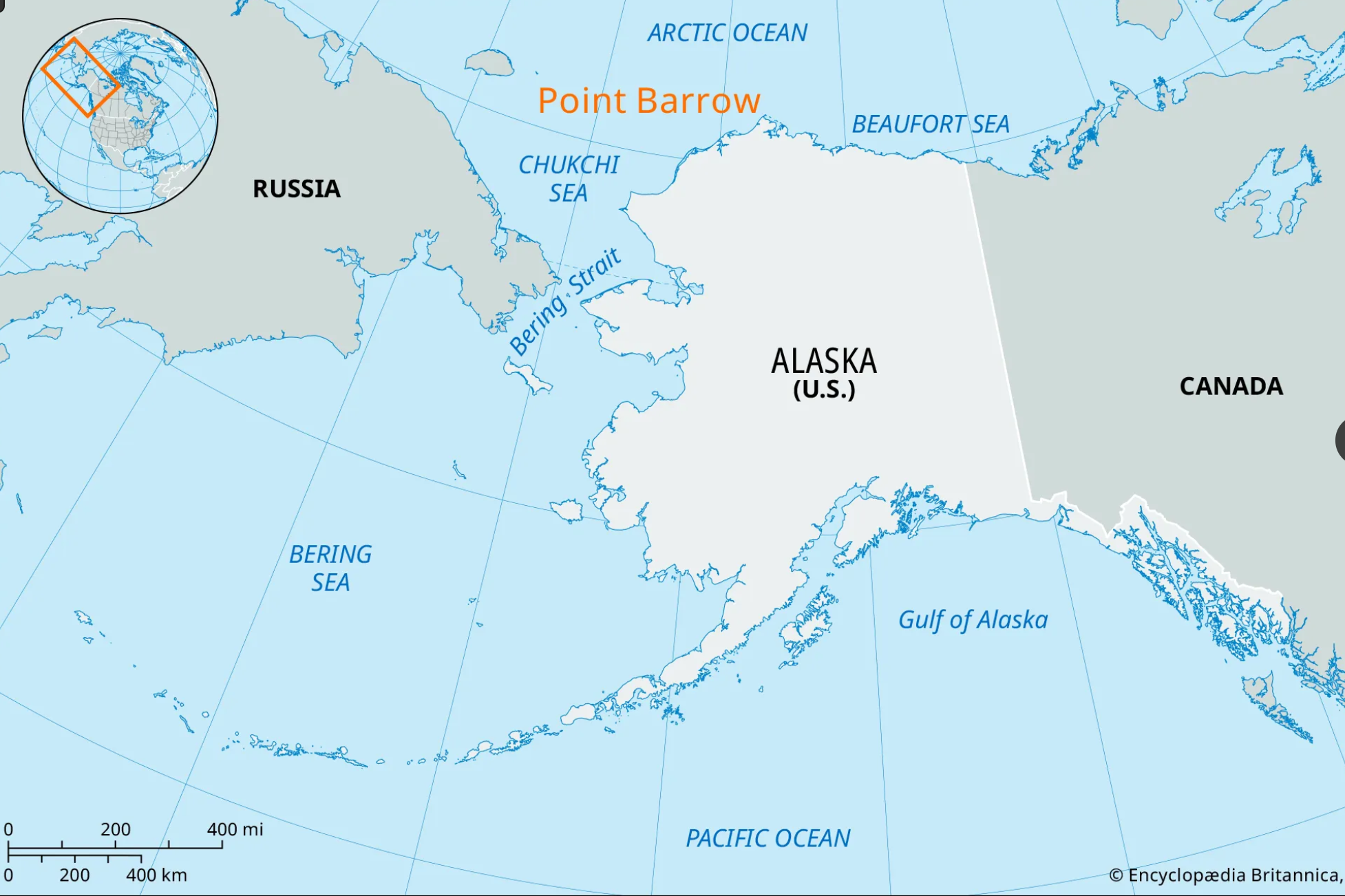
Map of Alaska showing Point Barrow at the northernmost tip — where the Arctic Ocean, Beaufort Sea, and Chukchi Sea converge near Utqiaġvik, Alaska

The Location

Where You're
Going

71.38°N · Utqiaġvik, Alaska

Point Barrow sits at the very top of Alaska — 330 miles above the Arctic Circle and roughly 1,300 miles south of the North Pole. The point itself is where Alaska's northern coast turns west, and three distinct bodies of water come together in one place.

There is no road to Point Barrow. Utqiaġvik is only accessible by air, and the route out to Point Barrow requires navigating terrain that changes with every season. This is not a place you wander to on your own — and that's exactly what keeps it as remarkable as it is. Getting here takes intention, and Robin is the person who makes it possible.

The tundra between Utqiaġvik and Point Barrow is part of the North Slope — a vast, treeless plain that stretches hundreds of miles south to the Brooks Range. In summer, it's alive with nesting birds and wildflowers. In winter, it's one of the quietest places on Earth.

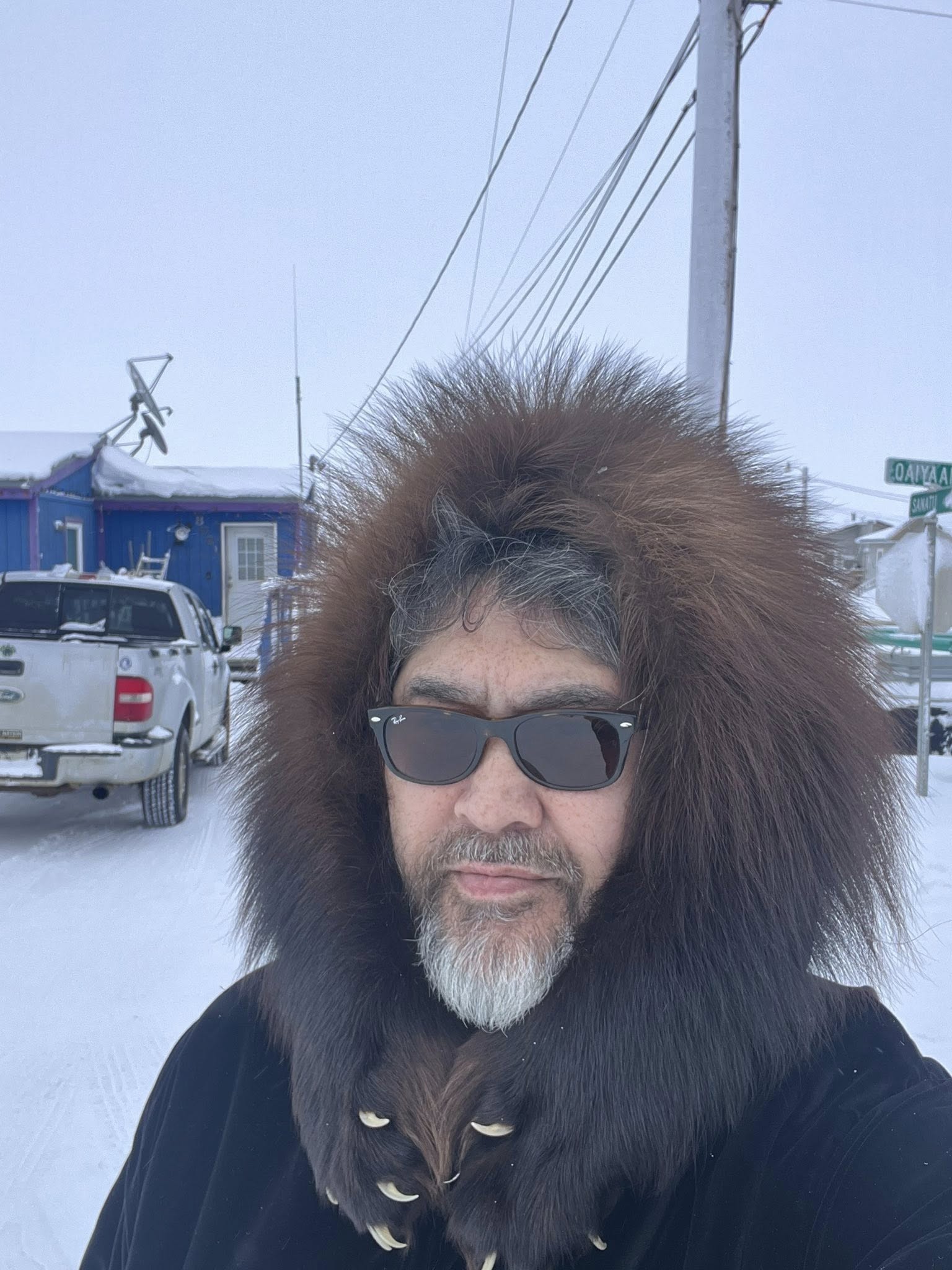
Robin Mongoyak, Iñupiat guide and founder of Kiita Tours, Utqiaġvik, Alaska — wearing a traditional fur parka

Your Guide

Robin Mongoyak

Robin was born and raised in Utqiaġvik, Alaska — one of the most remote communities in the United States. He has been traveling out to Point Barrow his entire life: hunting, fishing, and learning this coastline the way his family has for generations before him. Before founding Kiita Tours, he served as curator of the Iñupiat Heritage Center in Utqiaġvik. When Robin takes you to Point Barrow, you're going with someone who has been coming here since childhood — not someone who learned about it from a manual.

His tours carry no more than 3 guests. That keeps the experience personal, safe, and genuinely guided — not a shuttle ride with commentary.

Learn more about Robin

Also from Kiita Tours

Utqiaġvik Cultural & Historical Experience — Explore the Whalebone Arch, the Iñupiat Heritage Center, and the history and culture of Barrow. Approx. 4 hrs · $100/person (groups) · $150 solo.

View Cultural Tour

Reserve Your Spot

Ready to Stand at
the Top of America?


Groups are capped at 3 guests — reserve before you arrive in Utqiaġvik so Robin can confirm your date and prepare for conditions. Have questions first? Robin will answer them.

Also available: Utqiaġvik Cultural & Historical Experience · Preparation Guide